
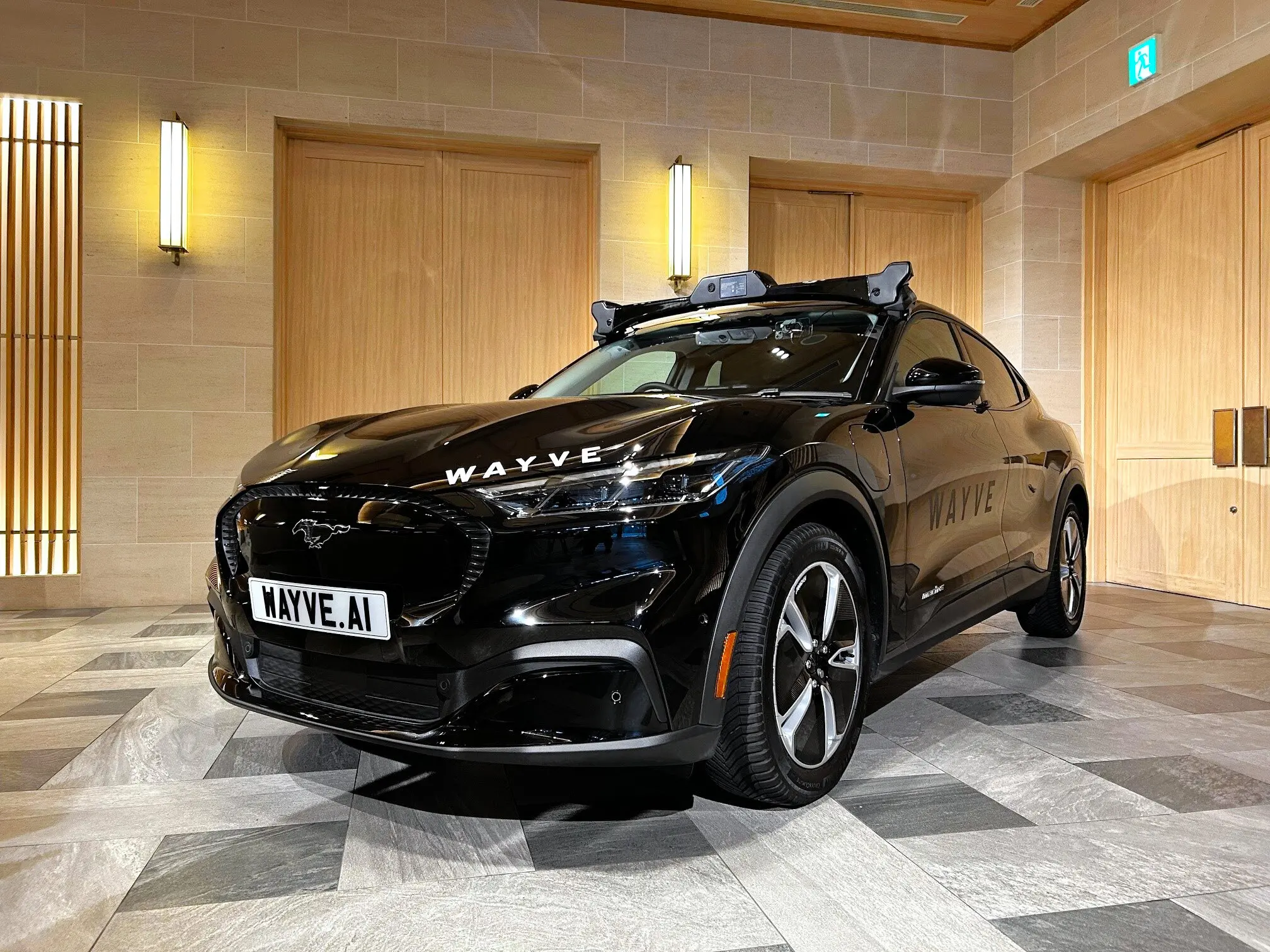
Wayve, a maker of artificial intelligence software for autonomous vehicles, said on Wednesday that it had raised $1.2 billion as more driverless taxis and vehicles are expected to be on the roads in the months and years ahead.
Wayve is seen as one of the most promising start-ups in Europe, which has lagged the United States in developing large tech companies. Wayve is creating an A.I. system that automakers can license, allowing them to focus on more traditional tasks of car design and manufacturing rather than building software. Wayve’s technology uses data from cameras, sensors and other tools to let vehicles make real-time decisions.
The deal values London-based Wayve at $8.6 billion. The $1.2 billion funding, which could grow to $1.5 billion if Wayve meets certain performance targets, is one of the largest amounts raised by a European start-up and is the latest sign of investor demand for A.I.-related businesses.
The investment was led by the venture capital firms Eclipse and Balderton Capital, and included some of the tech and auto industry’s biggest companies, such as SoftBank, Microsoft, Nvidia, Uber, Mercedes-Benz, Nissan and Stellantis.
Wayve is trying to keep pace with rivals like Waymo, which is owned by Google’s parent company and recently raised $16 billion to expand globally. Wayve said it expected to have driverless taxis on the road for customers this year through a commercial trial with Uber, starting in London and then other cities. Consumer vehicles incorporating the technology will be available to buy by 2027, with the cars able to steer, navigate and respond to traffic while a driver is behind the wheel for “supervision,” the company said.
Wayve, which raised $1 billion in 2024, is taking a path that is different from those of autonomous vehicle rivals. While Waymo has built a stand-alone taxi service and Tesla is building both autonomous cars and software, Wayve is developing only software that can be used by different car manufacturers in exchange for a licensing fee.
Wayve’s software uses technology to see and react to driving environments, relying less on maps to navigate. Data that is collected as cars travel is fed back into Wayve’s centralized A.I. system to help all the cars using its technology learn and improve.
The software works on “any vehicle produced by any manufacturer,” said Alex Kendall, Wayve’s chief executive, who co-founded the company in 2017 after studying computer vision and robotics at Cambridge University.
Companies developing autonomous vehicle systems have struggled to turn the technology into a lucrative business. In addition to the considerable technical challenges, the companies have to navigate government regulations, safety issues and public skepticism. Wayve lost nearly $62 million in 2024, the last year financial records are available.
Mr. Kendall said the latest investment “signifies the transition from deep tech research and development into commercialization.”
The investment is good news for the tech sector in Europe, where leaders have tried to diminish reliance on big American tech firms. European start-ups raised about $69 billion last year, compared with $320 billion for start-ups in the United States, according to PitchBook, which tracks venture funding.
Many European start-ups are benefiting from the A.I. boom as investors bet on the technology’s transformative potential, even as the business models and paths to profitability are unclear.
Mistral, a French A.I. company, raised about $2 billion in September. Nscale, a London-based developer of A.I. data centers, raised more than $1 billion that same month. Helsing, a German start-up incorporating A.I. into weapons systems, raised roughly $700 million in June. And Isomorphic Labs, an A.I. drug discovery firm in London with ties to Google, raised about $600 million last March.
Originally written by: Adam Satariano
Source: The New York Times
Published on: 24 February 2026
Link to original article: Wayve, an A.I. Driverless Car Start-Up in Europe, Raises $1.2 Billion
