
Cybercriminals are turning generative AI into a force multiplier in the cloud, compressing the time from public vulnerability disclosure to mass exploitation from weeks to mere days. A new threat report from Google Cloud’s security teams warns that attackers are moving faster than many defenders can patch, and they’re aiming squarely at third-party software that sits atop hyperscale platforms.
AI shrinks the exploit window for cloud vulnerabilities
According to Google Cloud’s latest analysis, adversaries now use AI to triage advisories, mine commit histories, auto-generate exploit proof-of-concepts, and launch large-scale scans within hours. That automation is crushing defenders’ reaction times. The report notes that the gap between disclosure and widespread attacks has collapsed by an order of magnitude, with opportunistic campaigns kicking off within 48 hours for high-impact flaws.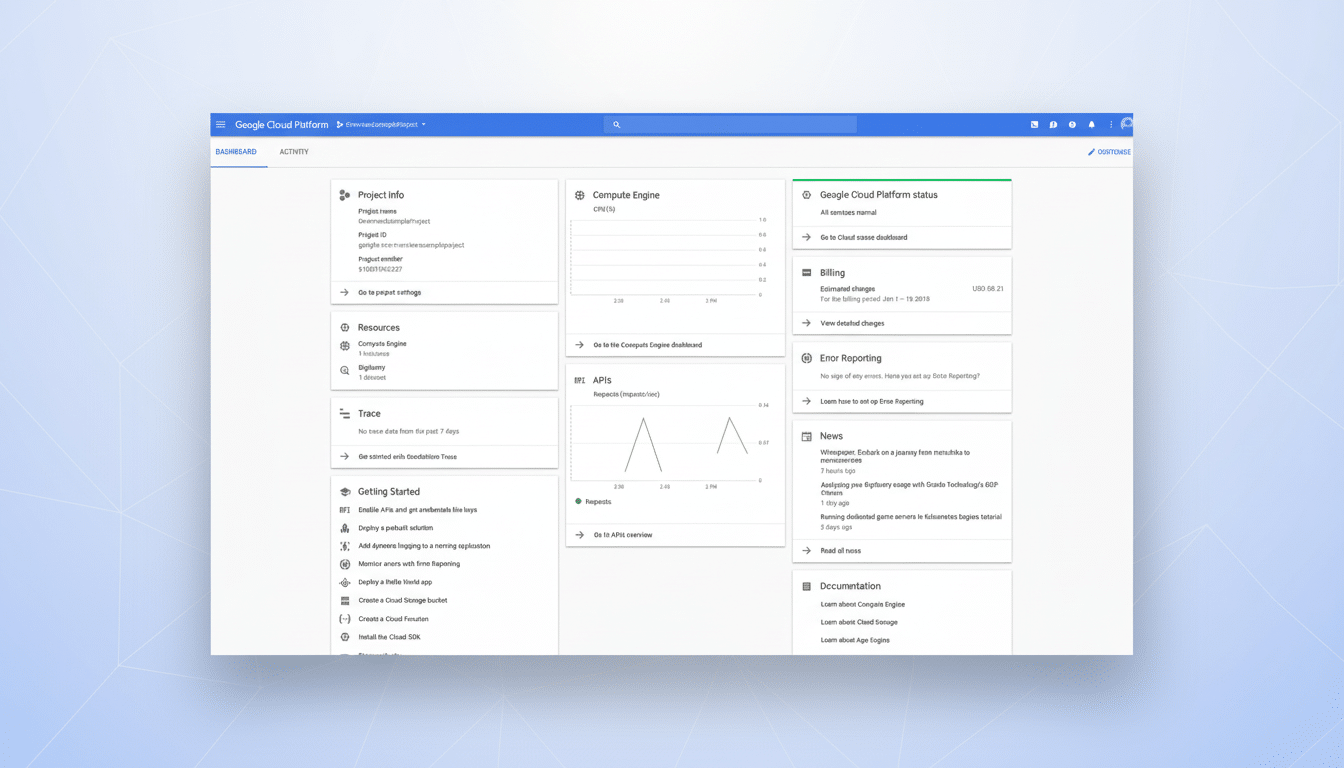
This is not theoretical uplift. Telemetry from cloud workloads shows coordinated botnets and human operators chaining LLM-assisted reconnaissance with hands-on-keyboard intrusion, making initial access cheap and repeatable. Defenders that still rely on ticket queues and manual change windows are playing catch-up against assembly-line exploitation.
Third-party code is the new front door for cloud attacks
The hyperscalers’ core infrastructure remains hardened. Attackers are instead zeroing in on third-party and open-source components: developer frameworks, wikis, plugins, observability agents, and container images that customers deploy in their own environments. That’s where patching lags and visibility is often weakest.
Google’s report cites a critical remote code execution bug in React Server Components nicknamed React2Shell that began seeing exploitation within 48 hours of disclosure. It also highlights an RCE flaw in the XWiki Platform that had been fixed upstream but lingered unpatched in customer environments, drawing in crypto-mining crews once exploit code circulated. These cases mirror broader government and industry findings, including CISA’s catalog of known exploited vulnerabilities, where third-party components dominate the list of active threats.
Identity and insider risk outpace brute force tactics
Rather than hammering passwords, attackers are walking through the side door with stolen tokens, OAuth abuse, overly broad roles, and misconfigured identity providers. AI helps sift public repos, artifact registries, and logs for secrets and misconfigurations at scale.
Insider-driven data exfiltration is also rising. Google’s researchers flag a surge in employees and contractors moving sensitive files to consumer cloud storage services such as Google Drive, Dropbox, OneDrive, and iCloud. Disturbingly, 45% of intrusions observed resulted in data theft without any immediate extortion, with adversaries maintaining quiet persistence to monetize later.
Developers are prime targets in cloud supply chains
Supply-chain compromises frequently start in the developer toolchain. One incident began with a tainted Node Package Manager module that lifted a GitHub token, used it to pivot into cloud consoles, copied data from an object store, and then deleted the originals — all within 72 hours. The speed and precision underscored how a single credential can unravel an entire environment.
In another case, a state-sponsored group tracked as UNC4899 lured a developer into opening a malicious archive during a purported open-source collaboration. Interacting with the files via an AI-assisted IDE triggered execution of a binary masquerading as a Kubernetes CLI, which beaconed to attacker infrastructure and served as a backdoor. From there, the operators hijacked Kubernetes workloads to siphon cryptocurrency, turning a social-engineering seed into a cloud-native heist.
Defenses must move at machine speed to counter AI threats
Google’s guidance is blunt: counter AI-accelerated attacks with AI-augmented defenses. That means automated discovery and prioritization of exposed services, continuous vulnerability scanning, and patching pipelines that can push fixes for internet-facing third-party software in hours, not weeks. Maintaining a current software bill of materials helps pinpoint which workloads inherit newly disclosed flaws.
Harden identity as if it will be the first control targeted. Enforce MFA everywhere, adopt short-lived tokens and workload identity federation, and scope roles to least privilege. Rotate keys automatically, kill unused service accounts, and require artifact signing and provenance checks in CI/CD to blunt supply-chain tampering.
At runtime, isolate blast radius. Use network policies and egress controls to restrict outbound traffic from workloads, apply Kubernetes admission controls, and enable tamper-resistant logging. Turn on object versioning and deletion protection for storage buckets to survive destructive attacks, and pair that with immutable backups and regular restore drills.
Finally, treat insider exfiltration as an expected failure mode. Monitor for anomalous transfers to consumer storage, implement data loss prevention for sensitive categories, and tighten device controls that allow personal-to-corporate file movement. For small and midsize businesses without in-house expertise, a managed security provider with strong cloud posture management, endpoint detection, and incident response capability can close the gap quickly.
The message is clear: third-party software is today’s soft underbelly in the cloud, and AI lets adversaries hit it faster than manual defenses can react. Automate, instrument, and rehearse now — because the next exploit kit will not wait for your next maintenance window.
Originally written by: Gregory Zuckerman
Source: FINDARTICLES
Published on: 9 March 2026
Link to original article: AI Accelerates Cloud Attacks Through Third-Party Tools
