
Many major Japanese companies, namely electronics makers, enjoyed rosy earnings in the year ended in March thanks to significant artificial intelligence-linked investment worldwide, but they are looking ahead with caution amid high costs for fuel and materials spurred by the war in Iran.
Chipmaker Kioxia saw its group net profit double from the previous year to an all-time high of ¥554.4 billion ($3.48 billion). President and CEO Hiroo Ota described the financial performance as a “historic feat.”
Kioxia benefited from rising demand for memory chips amid a rush to build more data centers due to the growing use of AI. The company expects to gain a profit of ¥869 billion only in the current quarter ending next month.
Advantest, a semiconductor test equipment maker, posted a 2.3-fold net profit increase. Group CEO Douglas Lefever said that demand is expected to continue increasing over the next two to three years.
TDK and Murata Manufacturing, which produce parts for data centers, and Hitachi, which makes power transmission and distribution facilities, also posted strong earnings. They expect sharp profit increases this fiscal year. Murata President Norio Nakajima said that his company is looking to “engage in capital investments” to meet demand.
Over 80% of component companies in the Topix stock index of the Tokyo Stock Exchange whose fiscal year ends in March posted their results as of Thursday, according to a tally by SMBC Nikko Securities. Their combined net profit increased 8.4% and is on track to log a record high for the fifth straight year.
The Iran war continues to cast a pall on outlooks for the year ending next March.
Airline ANA and shipping firms Nippon Yusen and Mitsui OSK Lines, which are directly impacted by rising fuel prices, project lower profits.
“We don’t see at all whether oil prices will stabilize soon,” Nippon Yusen President and CEO Takaya Soga said.
The Middle East conflict is also causing rising prices and shortages of petroleum-derived products such as plastics.
Restaurant chain Watami did not release its earnings forecasts for the year ending in March 2027, citing difficulty procuring boxes for its bentō boxed meal delivery operations.
NH Foods said it expects packaging-related expenses to increase by about ¥5 billion. “Packaging will cost more,” President Fumio Maeda said, predicting that the impact will remain for at least half a year even if the Middle East situation stabilizes.
Some say that the Iran war would have only a limited impact on earnings.
Hikaru Yasuda, chief equity strategist of SMBC Nikko Securities, said: “Profits will remain on a growth path. There is no need to be overly pessimistic.”
Sumitomo Chemical and three other chemical makers all project higher profits despite surging naphtha prices. Sumitomo Chemical President Nobuaki Mito said that his company would deal with higher costs that cannot be absorbed by efficiency improvements by revising prices.
Many companies opted not to reflect the impact of the conflict in their earnings projections, as it could affect various aspects such as procurement, manufacturing and consumer sentiment. “It can’t be estimated,” said Masafumi Senzaki, president and chief operating officer of Hitachi Construction Machinery.
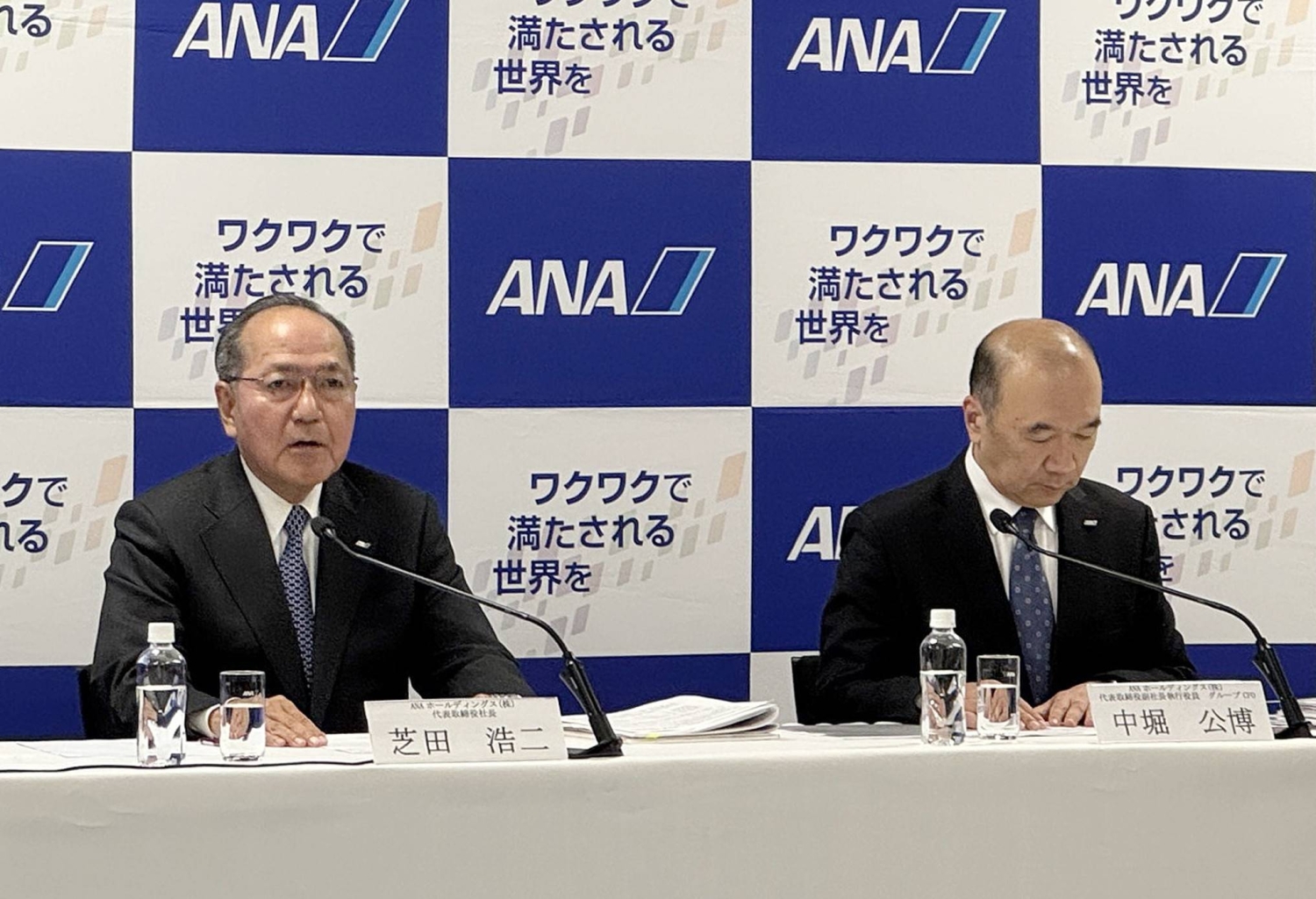
ANA President and CEO Koji Shibata wished for an early resolution of the war, saying he “hopes the international community will be sensible.” But depending on how the situation develops, firms may be forced to revise their outlooks.
Originally written by: JIJI
Source: The Japan Times
Published on: 18 May 2026
Link to original article: Japanese firms post AI-driven rosy profits, but Iran woes remain
