
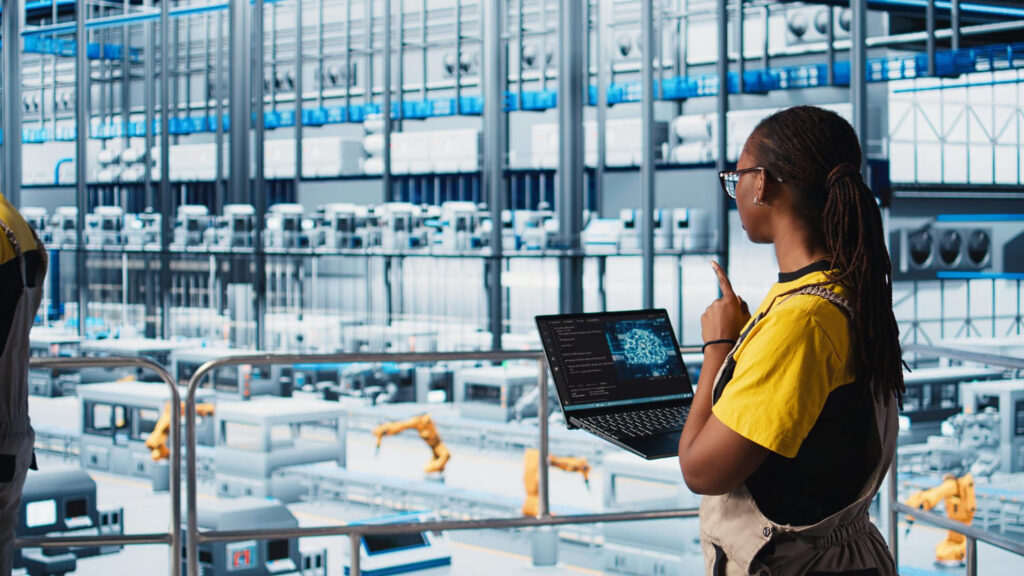
According to industrial technology reporting, AI is being integrated across factory floor operations to improve efficiency, safety and productivity. Key applications include predictive maintenance, quality inspection, workflow optimisation and human-AI collaboration tools.
Machine learning models analyse sensor data from equipment (motors, conveyors, robots) to forecast failures before they occur, reducing unplanned downtime and lowering maintenance costs. Computer vision AI inspects products at high speed, detecting defects with greater accuracy than human inspection and enabling real-time corrective action.
AI systems analyse production workflows to identify bottlenecks, recommend adjustments to schedules and resource allocation, and help balance workload across stations. Augmented reality and AI assistants support factory workers with contextual guidance, safety alerts and hands-free documentation during complex tasks.
Manufacturers adopting these systems report gains in production reliability, reduced scrap rates and more flexible responsiveness to demand variability. However, the report notes challenges around data quality, legacy equipment integration and workforce upskilling.
Ensuring that AI tools are transparent and explainable for operators, rather than opaque ‘black box’ systems, is also highlighted as necessary for trust and operational safety.
These trends reflect a broader shift toward ‘smart factories’ within the framework of Industry 4.0, where digital tools across hardware, networks, data analytics and AI collaborate to support lean, adaptive and resilient manufacturing systems.
Originally written by: Digital Watch
Source: Digital Watch
Published on: 27 February 2026
Link to original article: AI transforming the factory floor with smart automation and real-time oversight
