
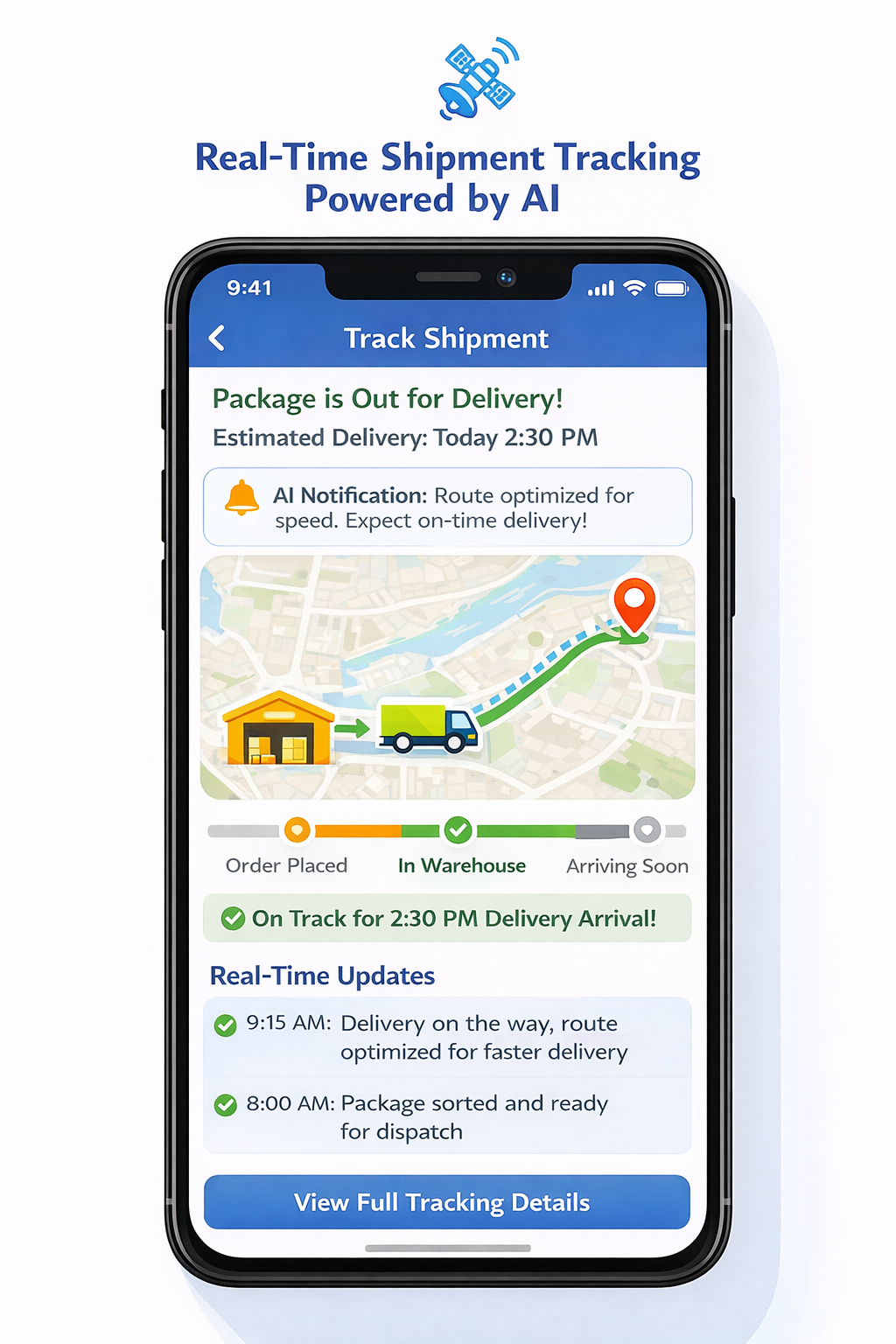
Artificial intelligence is now central to modern logistics, especially for e‑commerce. AI tools help logistics systems forecast demand, plan efficient routes, automate warehouse work, and track shipments in real time. Logistics companies using AI often see cost reductions of 10‑20 %, faster delivery times, and improved operational efficiency overall. For example AI‑based route optimization can cut transport costs by around 15 % and shorten delivery times by up to 30 %.
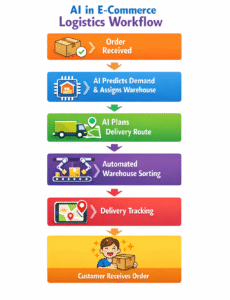
In the logistics sector AI helps with:
• Demand forecasting to predict when and where products are needed.
• Real‑time fleet and shipment tracking for transparency.
• Route optimization to reduce travel time and fuel costs.
• Warehouse automation and predictive analytics.
One notable example is Shopee. Shopee uses machine learning and AI to help predict customer demand so inventory and staffing can be better planned. Shopee’s AI also supports delivery time prediction, automated warehouse workflows, and optimizing how orders move through logistics networks. These technologies help the platform adjust quickly during high‑volume events like sales.
Another case is Cainiao Smart Logistics Network Limited, the logistics arm of Alibaba that supports AliExpress. Cainiao uses big data and AI‑powered forecasting to improve inventory management and route planning. Their systems aim for rapid delivery targets such as 24‑hour domestic and 72‑hour international fulfillment by linking real‑time tracking with intelligent planning. Machine learning models at Cainiao have increased order forecast accuracy to about 80 % and improve efficiency of sorting and customs processes.
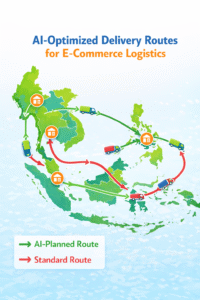
Across the industry, AI adoption in logistics is reshaping supply chains by:
• improving predictive analytics for demand and inventory planning.
• reducing fuel and operating costs through dynamic routing.
• automating routine tasks to boost productivity.
Despite these benefits, challenges remain such as the need for high‑quality data, skilled personnel, and coordinated systems across partners. Integrating AI into complex logistics networks takes investment and careful planning.
AI is transforming the logistics backbone of e‑commerce by making supply chains more adaptive, efficient, and customer centric. As online retail continues to grow, companies that leverage AI for logistics are better positioned to deliver faster, cut costs, and improve service quality in a competitive market. As these technologies continue to evolve, one question remains: Do you think AI will eventually run logistics operations with minimal human involvement? Share your thoughts in the comments.
