
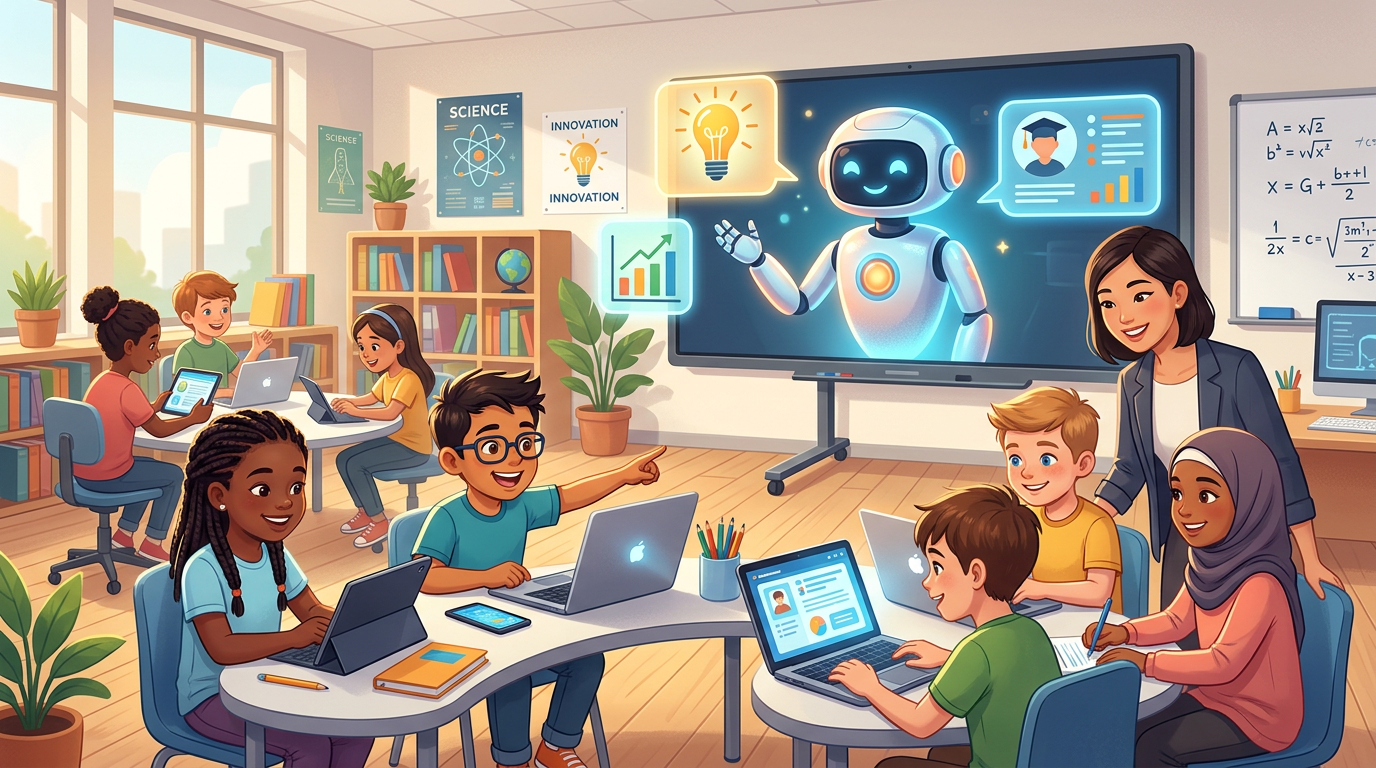
In classrooms from Jakarta to London, AI is quietly reshaping how students learn and how teachers design lessons. Instead of bulky textbooks and one‑size‑fits‑all worksheets, learners now get adaptive quizzes, instant feedback, and personalized study paths—all powered by algorithms that adjust to how fast they grasp each topic.
What’s changing in the classroom
-
Around 30% of K‑12 students now use AI tools daily, mainly for homework help, research, and summarizing materials.
-
In higher education, recent surveys show that up to 88% of university students have used generative AI during assessments, more than doubling in just a few years.
-
Teachers report saving roughly six hours per week when using AI for grading, planning, and modifying materials, which adds up to about six weeks per school year.
Real‑world case studies
In Australia, students have access to an AI chatbot (Microsoft Copilot) and found that their grades rose by about 10%, while they also spent less time on routine assignments. Another project in Indiana let students use AI to help with tasks such as drafting and revising; completion time dropped by around 40%, though some students admitted the work felt less “their own.”
AI‑powered tutoring systems such as Squirrel AI have been tested with thousands of students; one study reported a 15% improvement in question‑accuracy rates on quizzes after students used the adaptive platform.
Data that tells the story
-
The global AI‑in‑education market is projected to grow from about 7 billion dollars in 2025 to over 110 billion dollars by 2034, reflecting strong institutional demand.
-
Roughly 60% of educators now use AI tools in some form, and about 87% say at least one AI tool makes their daily work easier.
-
Around 53% of K‑12 students use AI for homework help; among university students, more than half use it to save time and improve their work quality.
Promises and pitfalls
AI can reduce busywork for teachers, personalize pacing for students, and offer 24‑hour support via chatbots and virtual tutors. At the same time, surveys show that many students and teachers worry about fairness in AI grading, privacy of data, and the risk of plagiarism or cheating. In some regions, fewer than 10% of schools have formal AI‑use policies, leaving students and teachers to navigate these tools without clear guidance.
How schools are responding
Several countries are starting to treat AI literacy as a core skill, not an add‑on, by weaving basic understanding of how algorithms work into computer‑science and digital‑literacy classes. Institutions that invest in “train‑the‑trainer” programs often report higher teacher confidence and more thoughtful integration of AI into actual lesson flow, rather than just using it as a shortcut.
If AI can already improve grades, cut preparation time, and offer round‑the‑clock support, the real question is how to use it without losing the human touch that inspires students. So what’s your experience: have you used AI tools for learning or teaching, and did they actually help you understand things better or just make the tasks faster? Leave a comment and share your story.
