
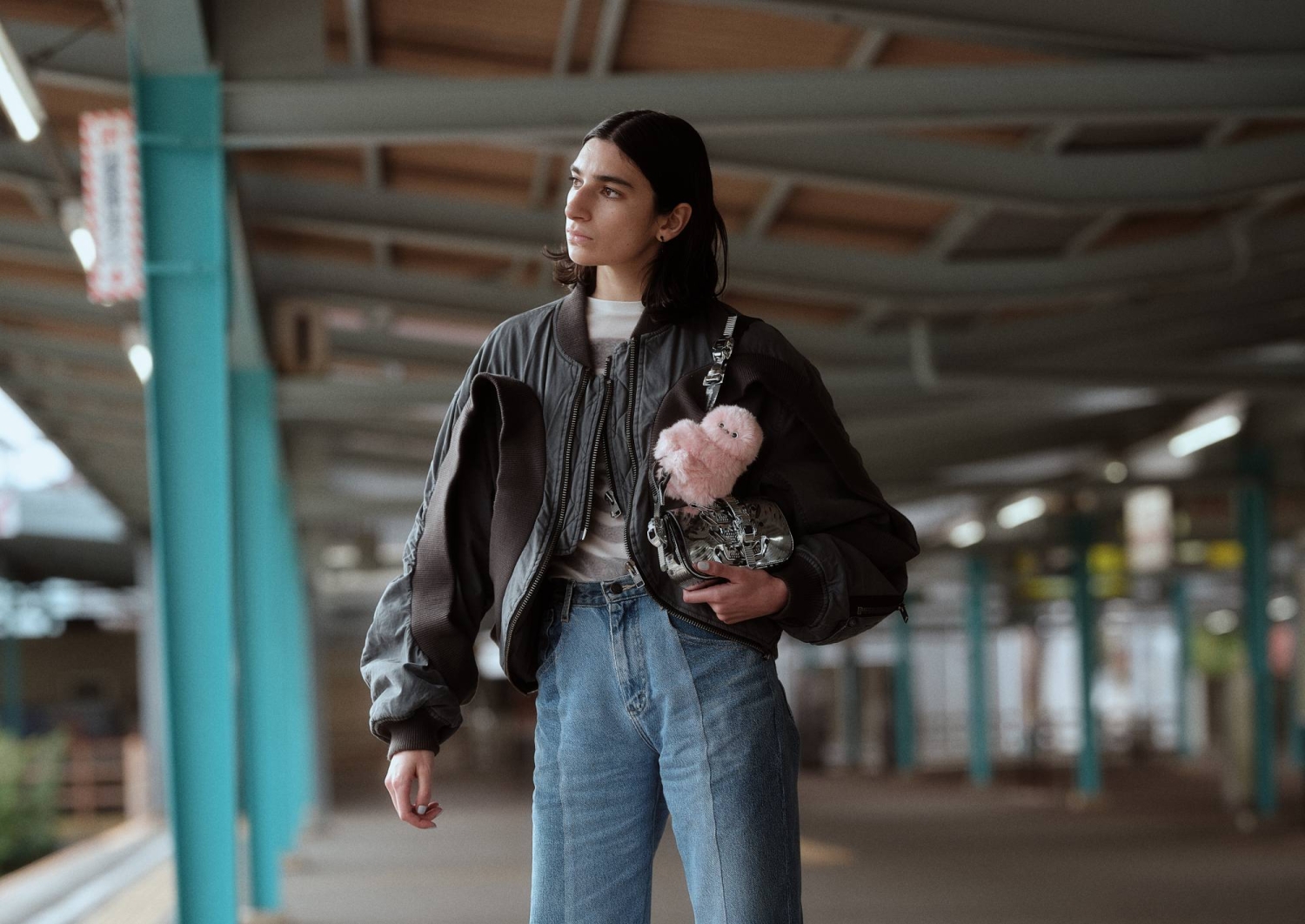
During the buzzy Milan Fashion Week, a tiny nonhuman guest is gearing up to make its fashion world debut: Mirumi, a robot with wide eyes and soft pink fur, which clutches onto stylish handbags and shyly glances around.
Mirumi is primarily a bag charm but takes design inspiration from human babies in its movement and big eyes. Babies have a gravitational pull and make others smile, said Shunsuke Aoki, founder and CEO of Tokyo-headquartered robotics firm Yukai Engineering, which created Mirumi, describing this as a recipe he wants to recreate. “A charm that steals your heart” is the marketing slogan.
Aoki hopes that the show, along with the company’s efforts in Europe and the U.K., will pay off, as the Labubu craze remains in recent memory.
Already, Yukai is seeing a contrast from its earlier experience in Europe.
“Europe used to be the unfriendliest place,” Aoki said of selling past projects there, describing pointed questions about purpose and use. Around three years ago when the company was developing Mirumi, this posed a barrier.
“Labubu was not that famous in Western countries, the U.S. or Europe. People thought that it’s a little bit childish to buy stuffed toys for adults, but it’s changing. A lot of people start to buy their favorite character plushies,” Aoki said, citing the popularity of the U.K.’s Jellycat, which, following its success in the domestic market, has conquered China.
“In American cities now I see a lot of stores selling characters like Hello Kitty, or animation characters, figures, plushies or key chains. People are accepting those characters more and more,” he said.
While Japan has no dearth of cute characters and fluffy toys, the international market is Yukai’s focus, with its English-language landing pages and social media accounts and influencers gushing about the product online. The company, which relied on crowdfunding for its overseas offering, secured preorders for around 4,000 units — excluding Japan, Aoki said. The company will manufacture 30,000 by May and preorders will begin to be shipped around April, around the time the product is launched in Japan, according to its website.
Aoki considers Mirumi a boy, though to many consumers, it’s a girl. But what’s most important is that the robot — which also comes in gray and white with prices expected to start around $149 — is compelling to buyers. Yukai has plans for collaborations, and Aoki hopes that Mirumi’s fashion debut, as well as a U.K. pop-up at the department store Harrods, will help the company reach the global fashion-conscious market, as collectibles company Pop Mart has found roaring international success in its Labubu product.
“We’ve got a lot of inbound interest from the fashion designers, people in the fashion industry,” he said, naming recent appearances in France’s Vanity Fair and Elle magazines. Most coverage of Mirumi also references the rise of Labubu, a cute monster collectible figure and fashion accessory.
The product, first released in 2023 by Pop Mart, became a global craze last year, winning celebrity fans including David Beckham. In the first half of 2025, Pop Mart predicted a profit increase of 350% thanks to Labubu’s unexpected growth. Analysts credited its success to its blind box “surprise” format, collectible nature and scarcity, in addition to the rise of the “kidult” market, a segment that encompasses both teenagers and adults. Labubu exploded with such ferocity that the “Labubu economy” developed, with rare products retailing for hundreds of thousands of dollars, but since its boom has come the concern of a “Labubu bubble.”
While the Labubu fervor may be dying down, with resellers seeing a dip in demand and market value decreasing toward the end of 2025, the kidult market is anticipated to grow.
Adults drive the growth of the toy market, research and technology firm Circana found. GMI projects the global toy market is projected to reach $203.1 billion in 2034, up from $114.4 billion in 2024.
Researchers have found that the retreat to childhood nostalgia is in part due to increased global uncertainty. This has also influenced the growth of the charm market in the fashion industry — customizable accessories for bags that are quirky or retro.
Most large fashion brands, including Fendi, Louis Vuitton and Coach, are tapping the segment to reach younger generations of customers, with charms that resemble teddy bears, food and pop culture figures, which also function as a cheaper entry point into the brand.
“Adults are drawn to products that evoke positive childlike memories,” said Jaana Jatyri, founder of Trendstop, a fashion forecasting agency, of the multibillion-dollar rise in the kidult market, describing these as evoking “comforting emotional connection.”
“(Mirumi) appeals to those seeking playful soft toy nostalgia,” said Jatyri, noting that in contrast, “Labubu’s ‘cute-scary’ aesthetic resonates with a more rebellious mindset.”
Aoki views Mirumi as a different kind of offering to Labubu, citing the fact that it is a robot, but he concedes it will likely resonate with a similar consumer base.
While the kidult market and the lean toward “cute” may be proven ingredients for success, tech-optimized fashion is something of a newer trend, and one Jatyri predicts will grow.
“Robotic and AI-enhanced products will become standard,” she said.
Aoki, whose Yukai Engineering creates robots that are often cute and animal-like in appearance, said robotic products were more engaging for users.
“For us, robots are something that evoke emotion. It’s not something you use only during playtime and put in a box after you’re finished playing with it. We design our robots to stay in the living room, on the desk and be something people spend time with,” he said.
Originally written by: Elizabeth Beattie
Source: The Japan Times
Published on: 24 February 2026
Link to original article: A fluffy pink robot may be Japan’s answer to Labubu
