
Home » GE Aerospace Teaches Robots Human Skills to Repair Jet Engines, Ease Backlog

GE Aerospace Teaches Robots Human Skills to Repair Jet Engines, Ease Backlog

A $300 million automation upgrade in Singapore aims to boost engine repair output by 33% without expanding floor space.

by Editor
0 comments

A technician who once shaped jet engine parts by hand is now helping train a robot to do the same work, as GE Aerospace moves to ease a global repair crunch.

The shift is underway in 2026 at the company’s upgraded automation lab in Singapore, where mounting maintenance delays have left aircraft grounded and airlines scrambling for parts.

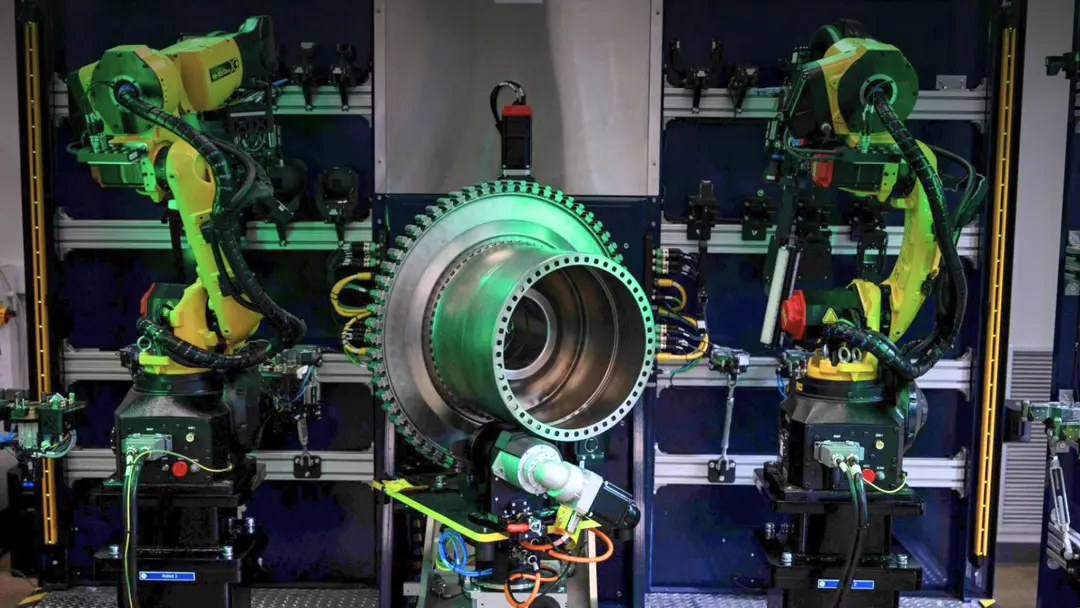
For more than a decade, GE Aerospace technician Suresh Sinnaiyan repaired jet engine compressor blades by guiding them carefully across a sanding belt. Today, he is transferring that hands-on skill to robotic systems.

The effort comes as airlines face months-long waits for engine overhauls, driven by unexpected wear in newer engine models and tight supplies of replacement components.

Automation targets a repair backlog

Across the aviation industry, overloaded maintenance shops have become a major bottleneck. Unexpected durability issues in the latest engines have forced airlines to ground jets or keep older aircraft flying longer. That has stretched repair timelines and increased costs.

The strain has sparked tension between airlines and manufacturers. Some carriers argue that shortages have allowed engine makers to raise prices. Manufacturers counter that they are investing heavily in support networks after spending billions of dollars on engine development.

Tony Fernandes, co-founder of AirAsia, voiced the frustration clearly. “They have got to remember airlines are their future and treat us as partners,” he said, as reported by Reuters, referring to the industry overall.

The aerospace firm says expanding repair capacity is central to relieving this pressure. By restoring used components instead of replacing them with newly built parts, the company aims to free up supplies for new aircraft production while keeping the global fleet operational.

Singapore hub gets $300 million upgrade

Singapore has become a focal point in that strategy. The firm’s 2,000-employee repair hub there is undergoing a transformation that includes automation, digital tracking tools, and artificial intelligence systems. The company has said total investment could reach up to $300 million.

The goal is ambitious. It plans to increase repair output at the site by 33% without expanding its physical footprint. Instead, it is reorganizing workflows, redesigning floor layouts, and automating tasks that can be standardized.

The facility is also rolling out “Flight Deck,” the firm’s version of Lean manufacturing principles focused on efficiency and waste reduction. CEO Larry Culp explained the philosophy. “It’s not about sprinting at quarter’s end to make a Wall Street guide. It is making every hour and every day count,” Culp stated.

By repairing more components, the company says it can cut turnaround times for key processes by half and reduce costs for airlines.

Cutting turnaround from 40 days to 21

Speed is critical. Every day an engine sits in a shop is a day an aircraft cannot fly. “Repair can really improve turnaround time … the less time the engine is off the wing, the better,” highlighted Iain Rodger, head of GE Aerospace Component Repair Singapore.

One reorganized section focuses on turbine nozzles from the widely used CFM56 engine. These parts endure extreme heat inside the engine core. In 2021, the turnaround time for that repair line stood at 40 days. The US firm now aims to reduce it to 21 days by 2028.

To prepare for servicing newer LEAP engines, the nozzle repair area is dedicating about one-third of its floor space to reconfiguration. Developing approved repair methods for newer engines is essential. Without them, airlines must buy new replacement parts, which are often more expensive and in limited supply.

“Now we can see problems and identify where issues are,” stated Nozzles Business Leader Han Hui Min about the redesigned layout.

Teaching robots a skilled human task

Some of the most difficult work involves the human touch. Compressor blades inside engines such as the CFM56 must be reshaped through a process called blending. Over years of use, blade tips deform and must be restored within tolerances of just a few thousandths of an inch.

“It’s really hard to do. (Until now) it is 100% manual,” added Sinnaiyan.

GE hopes to capture that precision in robotic systems, reducing reliance on scarce specialized labor while increasing throughput. Repair processes also represent a critical revenue stream for engine makers, who earn strong margins from servicing and licensing approved repair methods.

Still, repairs must follow strict regulatory approvals and quality standards. Analysts note that as new aircraft production recovers, demand for older jets and their repairs may ease.

“It is about moving away from firefighting and heroics to a different type of preferred performance,” Culp said.

If successful, GE’s automation push in Singapore could help clear maintenance bottlenecks and gradually ease pressure on airline operations and fares.


Originally written by: Sujita Sinha

Source: Interesting Engineering

Published on: 13 February 2026

Link to original article: GE Aerospace teaches robots human skills to repair jet engines, ease backlog

You may also like

Leave a Comment